The Founder Effect: Vietnam 2026
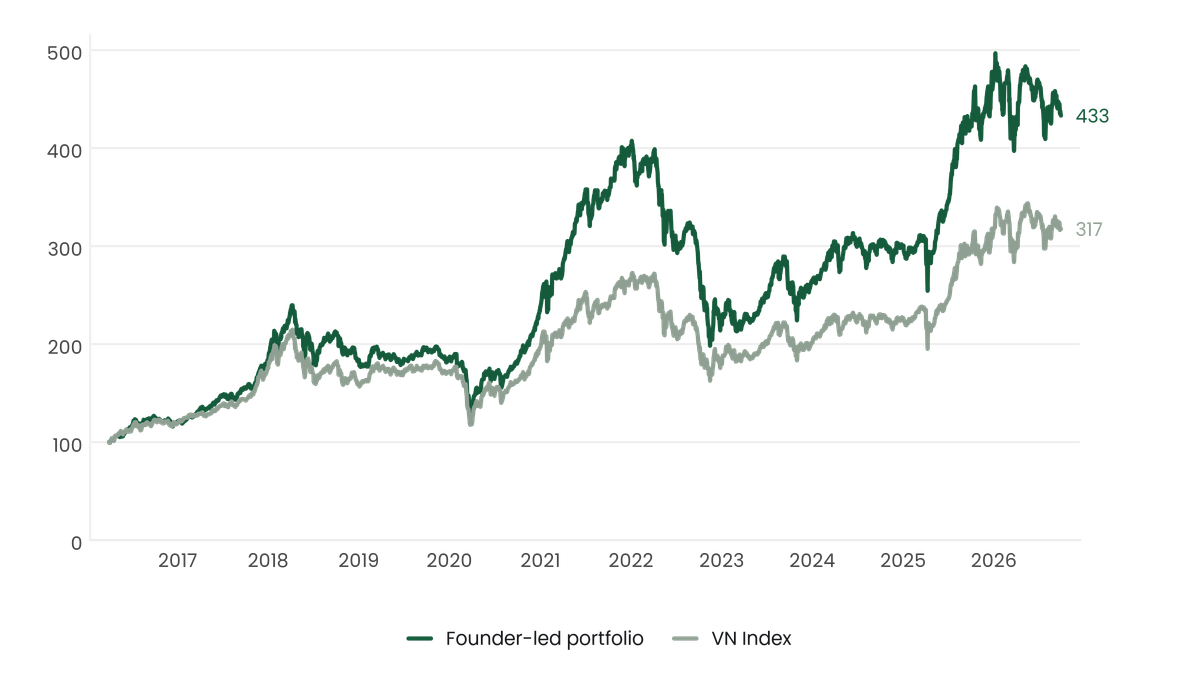
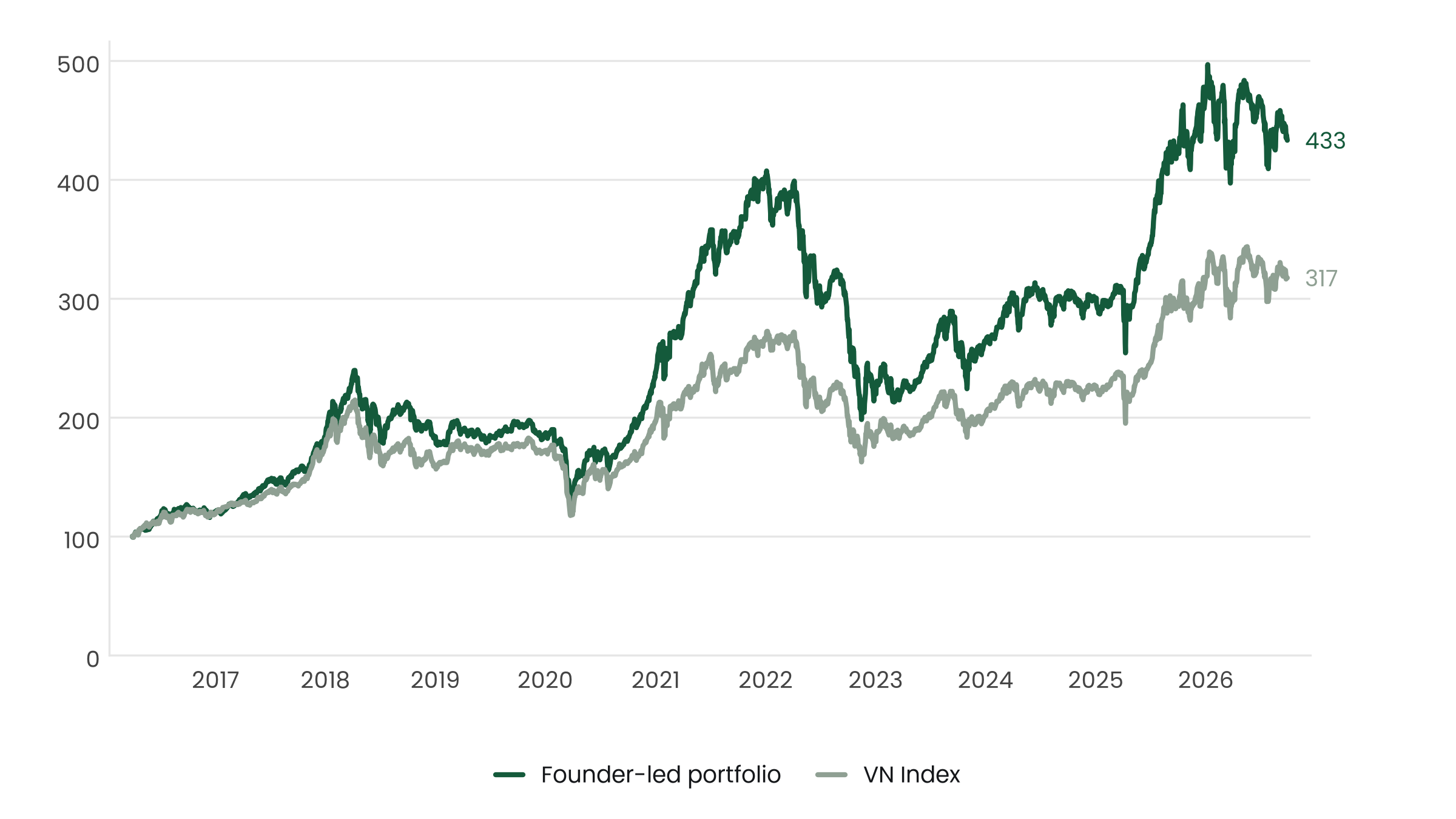
Founder-led companies on the Ho Chi Minh Stock Exchange returned 14.99% a year from 2016 to 2026 against 11.63% for the VN Index.

This addendum extends The Founder Effect Annual Report 2026 to Vietnam. It asks whether the founder-led companies listed on the Ho Chi Minh Stock Exchange are a distinct and investable part of the market, and whether they have rewarded shareholders. The answer is yes on both counts.
Headline findings
- A portfolio of founder-led companies returned 14.99% annualised from March 2016 to September 2026, against 11.63% for the VN Index, an advantage of 3.4 percentage points a year. Indexed to 100 at the start, it reached 433 against 317 for the index, and it led the index in 8 of 11 calendar periods. With dividends reinvested the portfolio returned 16.04% a year against 13.26% for the VNAllshare total return index.
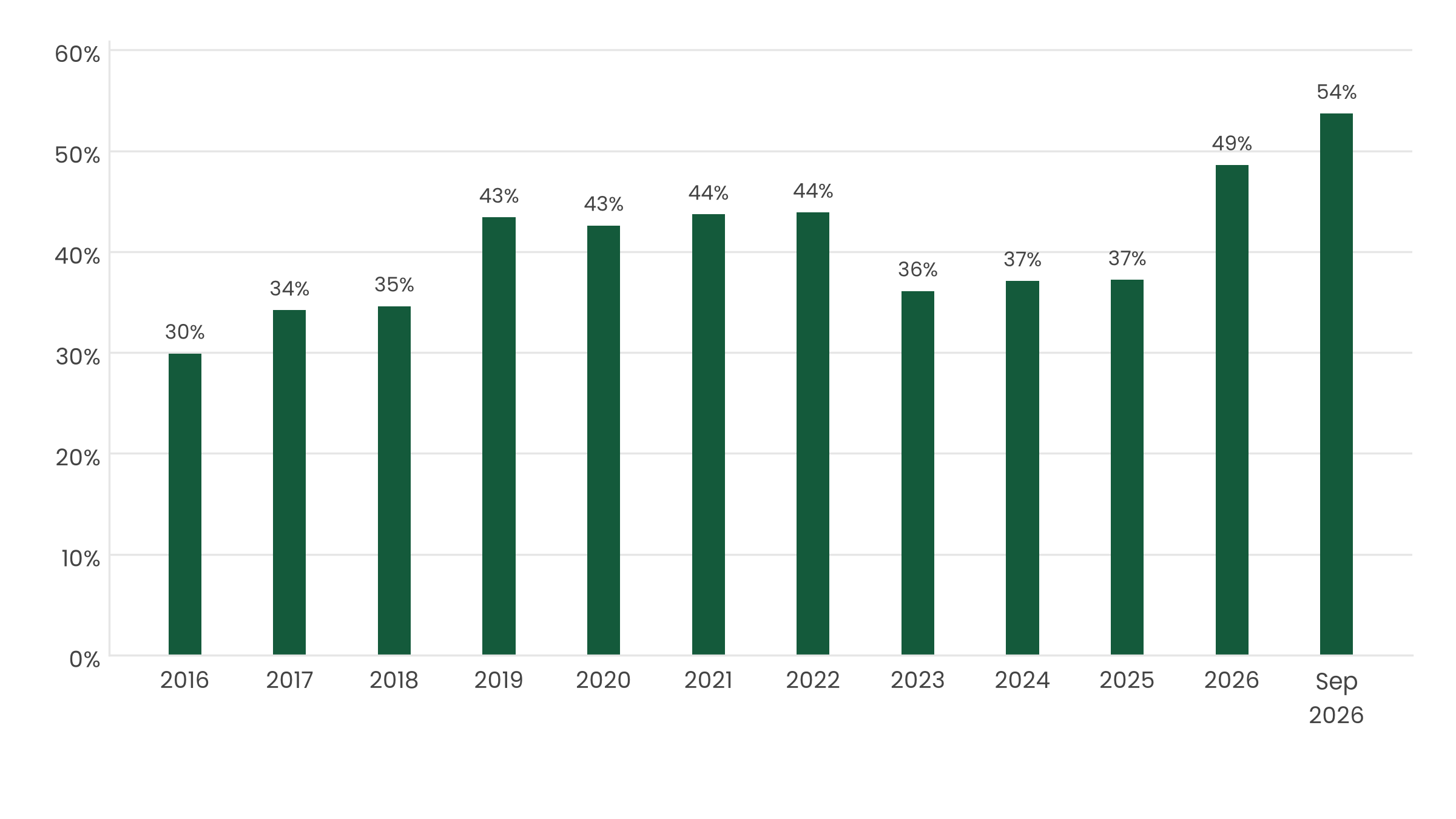
- Founder-led companies are the core of the listed market: 101 of the 315 companies in the VNAllshare index, and 53.6% of its market capitalisation. They include 14 of the 30 VN30 members.
- Their presence is growing. Among today's index members, the number of founder-led companies trading on the exchange rose from 52 in 2016 to 101 in 2026, and their share of market value from 30% to 54%.
The risk side
The returns came with somewhat more risk. Annualised standard deviation was 20.18% against 18.26% for the VN Index, and maximum drawdown was -51.34% against -45.26%; return per unit of risk was still higher, with a Sharpe ratio of 0.77 against 0.68. The largest shortfall came in 2022, the year of Vietnam's property and corporate bond market reset, when the portfolio fell 45.5% against 32.8% for the index. Real estate is 58% of the founder-led cohort's market value, while banks are 57% of the rest of the market, so a founder-led lens leans toward real estate and away from banks.
Why now
FTSE Russell reclassified Vietnam to Secondary Emerging market status with effect from 21 September 2026, and Resolution 68 identifies the private sector as the most important driving force of the economy. Founder-led companies sit where the two meet: they are the private sector the policy sets out to grow, and the large and liquid names the reclassification brings into view.
Download the report
The Founder Effect: Vietnam 2026 (PDF) →
Lumenary Research publishes evidence on founder-led companies globally. Subscribe to receive new research as it is released.
Analysis by Lumenary Research using company and market data provided by FiinGroup. FiinGroup does not guarantee the accuracy of its data and is not responsible for the founder-led classification or the analysis. Results are backtested: today's founder-led classification carried back over historical prices, not the record of a live index, and past or simulated performance is not a reliable indicator of future performance. Research and general information only; not financial product advice.