Too Many Managers, Not Enough Value Creation
The biggest risk facing many companies is not valuation; it is organisational complexity. Airtasker's Tim Fung on why scale and capability are not the same thing.

As reporting season approaches, investors should spend less time analysing earnings and more time analysing organisational complexity.
Over the coming months, investors will pore over earnings results, margin forecasts and management guidance.
Most will be looking in the wrong place.
The bigger question is simpler: who is actually creating value?
The biggest risk facing many companies today is not valuation. It is organisational complexity.
Westpac has hundreds of executives, thousands of employees and layer upon layer of governance. KPMG is one of the largest professional services firms in the country. Yet both have recently found themselves under scrutiny. Why?
Because more management does not necessarily produce better outcomes.
Corporate empire-builders have a tendency to add layers of management, reporting, governance and process. Each addition is usually well intentioned. Better oversight. Better accountability. Better internal controls.
Yet the cumulative effect is often the opposite.
Decision-making slows. Accountability becomes diluted. Distance grows between employees and customers. Organisations become increasingly focused on managing themselves rather than creating value.
One of the more interesting observations from my recent conversations with Airtasker founder Tim Fung was that companies do not necessarily become better as they grow. Often, they become more complex.
Tim Fung has experienced the full journey, scaling Airtasker from a startup into an ASX-listed company. His reflections during that time? Complexity and capability are not equivalent.
The issue is rarely a lack of capable people. It is organisational design.
At some point, many companies stop asking the most important question: who is actually creating value?
Managers managing managers
Spend time inside a large organisation and you will often find managers managing managers. Teams prepare reports for other teams. Meetings are held to discuss decisions that could have been made weeks earlier.
Everyone is busy.
Few people are directly improving the product, serving customers or allocating capital.
This is not an argument against management. Good managers create enormous value. The problem arises when management becomes an end in itself rather than a means to creating value.
Fung reflected candidly on this during our discussion. As Airtasker grew, the company naturally adopted many of the management frameworks expected of a scaling business. Objectives and key results. Additional reporting lines. More formal delegation structures. Many of these changes were introduced by experienced executives who had previously worked in much larger organisations.
The intention was sound. The outcome was more mixed.
Looking back, Fung believes some of those structures created unnecessary distance between decision-makers and customers. Decisions became slower. Accountability became less direct. Airtasker has since simplified many of those layers and placed greater emphasis on hiring for judgement and capability, rather than assuming that experience in a large corporate automatically translates into a fast-growing founder-led business.
This observation extends beyond Airtasker.
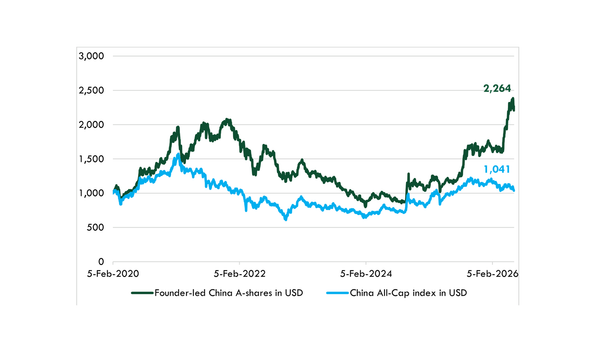
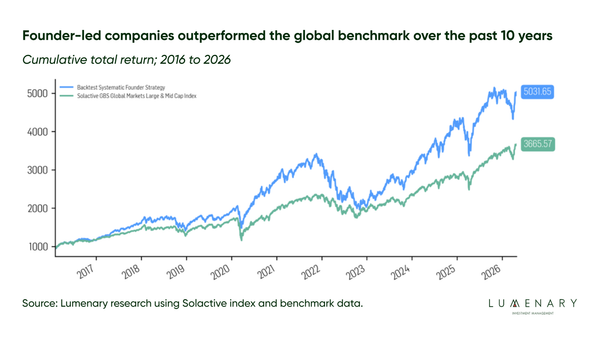
Many of Australia's highest-performing companies have built their advantage not through organisational size, but through organisational focus. The lesson is not that smaller organisations are inherently better managed. It is that the best organisations remain relentlessly focused on value creation, regardless of their size.
What investors should focus on instead
Investors spend enormous effort analysing financial statements. We spend far less time analysing how organisations actually function.
How many layers sit between frontline employees and decision-makers?
How quickly can major decisions be made?
How much organisational energy is devoted to customers rather than internal process?
How many people are creating value, and how many are administering it?
These questions rarely appear in annual reports. Yet they often determine long-term outcomes.
AI may expose the problem
Much of the discussion around artificial intelligence focuses on replacing software developers, lawyers or accountants. A more useful question is what it means for the way organisations are structured.
If AI can take care of reports, meeting notes, presentations and even performance monitoring, companies may start asking whether they really need so many layers of management.
Large parts of modern organisations exist primarily to manage information.
When information becomes real-time and readily accessible, some of those layers become harder to justify.
The winners may not be the companies with the most ambitious AI strategy.
They may be the companies with the simplest organisations.
The underlying cause of investor dissatisfaction
This is why investors should pay close attention to upcoming shareholder voting and AGM season.
Growing shareholder dissatisfaction is often seen as a reaction to poor performance or executive pay. But sometimes it points to a deeper concern - a growing belief that organisations are becoming more complex without becoming more effective.
For decades, management theory has encouraged businesses to add structure as they scale. More controls. More oversight. More governance. Every layer sounds sensible when it is added. The problem is that complexity compounds.
The next decade may require the opposite.
Investors spend countless hours analysing balance sheets and far too little time analysing organisational design. That may be backwards. Customers do not pay for committees, reporting lines or internal process.
But shareholders should care deeply about whether those things are helping or hindering value creation.