Applying a capital allocator's mindset to business success in the resources industry
Mining CEO tenure averaged 4.4 years from 2010-2019 while a greenfield development takes 15. Australian LTIs are 36% of CEO pay against 75% in America.

First published by State of Play in collaboration with Slate Advisory, August 2023. Co-authored with Huw Wiltshire, Graeme Stanway and Lisa Harwood.
Sustained business success requires a culture of innovation so companies can retain an advantage over their competitors, and disciplined capital management so they can weather inevitable volatile financial environments and seize opportunities when competitors retreat.
In the face of declining ore-body grades, a scarcity of new deposits, increasing ESG requirements, uncertain geo-political relationships, and disruptive technologies such as automation and AI, innovation remains an essential requirement for mining companies. However, deployment of innovations in the resources industry will by their nature require heavy capital investment in new forms of energy supply and storage, new types of equipment and extraction technology and substantial new infrastructure. The level of capital intensity required in the resources industry creates a level of risk which can either lead to businesses avoiding necessary investments in impactful innovation, or, if not managed skilfully, making sub-optimal investments.
Given capital allocation is such an important component in optimising and deploying profits for resources companies, this naturally raises the question as to what can be learnt from those who excel in this endeavour. The following paper therefore aims to draw learnings from successful capital allocators in addressing some of the challenges faced by the resources industry, utilising State of Play’s independent data-driven research to develop deep insights, and Slate Advisory’s experience in strategy.
Aligning long-term thinking with investment approach
Perhaps the most pervasive lesson to be drawn from legendary capital allocators such as Warren Buffett (CEO of Berkshire Hathaway) and Robert Millner (Chairman of Washington H. Soul Pattinson) in relation to the resources industry is the value of long-term strategic thinking and alignment with capital allocation. In an industry where it typically takes about 15 years from discovery to production for a greenfield development, and about five years to construct and ramp a brownfield mining expansion, and even longer to recuperate the return from these investments, long term strategy is vital in the resources industry.
However, this need for a consistent long-term perspective is challenged by the fact that, between 2010–2019 the average CEO tenure of mining companies was 4.4 years. One resource industry investor interviewed by State of Play suggested the “traditional CEOs will have the three-to-five-year plan…their incentive is to optimise for short term performance”. Furthermore, for the past 10 years State of Play data suggests the main timeframe for innovation has been one to three years across most mining businesses.
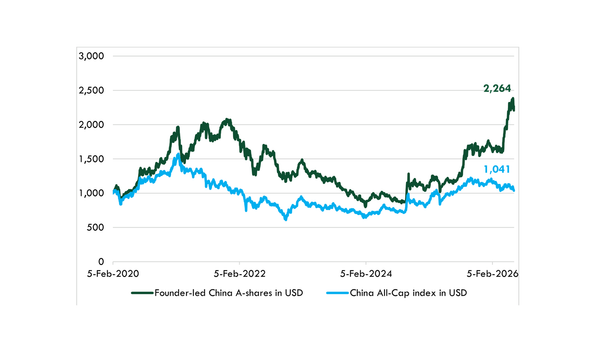
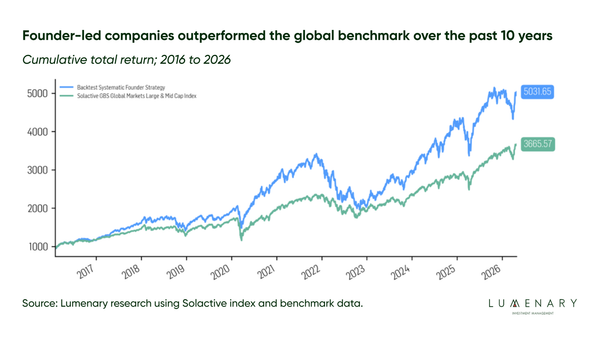
The way CEOs are currently incentivised often exacerbates a focus on short term benefits rather than the seizing of longer-term opportunities, which can be of detriment to a business’ ability to innovate where long term competitive advantage impact is greatest. In contrast, founder CEOs, which have natural incentives that are aligned to the longer term, tend to engage in consistent longer term strategic thinking and are more deliberate about debt levels and expansions in terms of the broader strategic context. It is not a coincidence that founder-led companies outperformed others in innovation amongst S&P 500 companies because of three characteristics: insurgency (strong commitment to company mission across the workforce), front line obsession, and in the context of this paper, an owner’s mindset.
Mineral Resources (MinRes) offers a strong example of the benefits of long-term strategic thinking often observed in founder led companies. As a diverse business comprising mining services, integrated lithium hydroxide production, iron ore production, and energy, MinRes has maintained a disciplined approach to cash management and has actively looked to benefit from the global energy transition. In expanding MinRes’ integrated mine to battery lithium vision, CEO Chris Ellison has mitigated capex risk despite volatile lithium prices through the consistent use of partnerships and joint ventures, while remaining agile in capital allocation despite a large debt holding. Utilising their strong cash flow and its mining services arm, MinRes has continually re-invested in innovation and cost-cutting. Strong, but conservative capital allocation and continual growth has been underpinned by Ellison’s leadership and strong vision for MinRes as their founder, CEO and majority shareholder. The success of Ellison’s approach and long-term vision aligns with the sentiment of the broader industry, with State of Play’s 2023 Mining Industry Survey highlighting leadership (53% of respondents) and vision and roadmap (43%) as two of the best methods to improve innovation within the company.
Meanwhile, as companies scramble to take advantage of disruptive technologies such as AI and automation, the ability to seize opportunities early and commit to long-term innovation observed in founder-led companies becomes more vital. Vulcan Energy Resources founder and Chairman, Dr Francis Wedin, inverted the role of a resources company utilising renewable geothermal energy from lithium brines deep underground to source and refine lithium hydroxide, while supplying excess energy to the grid. Early and committed adoption of this innovative technology, asset design and business structure, has already seen Vulcan quickly attract several different leading consumers for binding lithium hydroxide offtake agreements in Europe.
With these examples in mind, the question then becomes, given the unique challenges and cyclical nature of mining, how can companies create a culture of long-term thinking akin to those fostered by founder CEOs?
Rethinking incentive structures
Companies have long utilised incentive structures and remuneration agreements to create an owner’s mindset and improve company performance. This is an attitude shared by one of Australia’s leading executives Robert Millner, Chairman of Washington H. Soul Pattinson, and coal mining company New Hope, who suggests directors have got to have “skin in the game”.
Firstly, adjusting the proportion of long-term equity agreements in remuneration is important in motivating CEOs to mitigate risks and make prudent decisions on capital allocation. In Australia, it may be necessary to elevate the proportion of long-term incentives (LTIs), as LTIs account for 36% of the median Australian CEO compensation, compared to 75% of the median CEO compensation in America. Analysis of CEO remuneration within resources companies also reflects this disparity with long term incentives representing ~45% of CEO remuneration.
A review of mining executive remuneration agreements indicates that there are more contingent long-term remuneration arrangements (3–5 years) in mining executives’ remuneration agreements compared to short term incentive (STI) structures (1 year) in non-mining executives. While framed as long-term incentives, similar to the discrepancies between ROI and CEO tenure, these may also serve to emphasise short term gains. Nearly 70% of CEOs suggested their timeframe for innovation was less than three years, while only 5% focussed on innovation timeframes beyond five years, and none beyond 10 years.
The unique characteristics of the resources industry make incentive agreements more complex than other sectors. Strong cyclicality in commodity prices and company earnings must be factored into remuneration agreements. Recently appointed CEOs tended to aggressively negotiate incentive-based pay during cycle upturns, which in turn increases risk preference during these upcycles. Ensuring that remuneration is more removed from cyclical supply demand balances, and linked to specific project goals, is key to preventing over-investment in periods of high commodity prices – leaving companies exposed and restricted during downturns – and instead promoting long-term strategic thinking.
Strengthening the link between remuneration and the outcomes of company strategic goals is vital. This will likely involve increasing both the proportion and timeframe of performance-based shares where remuneration occurs in the year or years following a return on investment once strategic goals are realised. This shift is beginning to occur within some resource companies, especially Australian based companies. Bellevue Gold has introduced a unique one-off net zero emissions incentive for executives and all employees if the company achieves net-zero scope 1 and 2 emissions by 2026. Likewise, strategic measures form more than 30% of FMG’s LTI agreement, rewarding the success of projects such as Iron Bridge and Pilbara Energy Connect, while project-based incentive agreements are also a large part of Iluka’s remuneration agreement assessing the success of diversification into REEs and creating additional value in their Sierra Rutile projects.
Despite this shift, the majority of resource companies continue to predominantly reward strategic performance over the short term. Strategic objectives remain a small proportion of qualifiers for executive STIs and LTIs, with financial metrics such as total shareholder return (TSR) far and away the predominant qualifier in most resource companies.
As we enter a significant period of capital investment and innovation driven by disruptive technologies and decarbonisation, risk management, long term strategy and innovation, which are more often observed in founder led companies, is even more vital. Effectively replicating an owner’s mindset will require implementing a greater proportion of longer-term remuneration agreements linked directly to the success of strategic outcomes. A move away from the established model of short term remuneration structures will contribute to achieving innovation and investment timeframes unrestricted by tenure length and strong risk management in capital allocation. Thus, remuneration agreements represent a crucial opportunity for companies to cultivate and maintain competitive advantage across multiple mining cycles.